Chapter 2b
Retribution
As promised, within the hour, a black convertible drove up outside the main entrance to get him. Only one, armed escort and the doctor who had given him the shot came to take him to the lobby when it was time. Several patients and staff stared as he struggled not to lurch through the hallways and the lobby while constraining the mass of this chain that rattled constantly with his movements as he limped along. He narrowed his eyes at them, glaring back sullenly. This is impossible. Why would they make anyone do this, let alone someone who can barely walk? Coils of it that he looped over his forearms had the tendency to slide off and he kept rewinding them, but he eventually managed to get it to settle to where it didn’t move around so much and so that he could carry it without tripping on it or knocking things over with it. Even then, some piece of it dragged behind him as he walked. The procession came to a halt when a tall, older man in a white coat sauntered to the middle of the hallway and stood unmoving in their path. Gerhardt noticed the intensity in his eyes and how his cheeks appeared drawn.
“Does he understand Francinian?” The older doctor directed his question to the other doctor. Gerhardt’s escort nodded. The older man took a step forward to stand right in Gerhardt’s face. He spoke softly, articulating every word. “I’m your surgeon. I wanted to make sure you lived to regret this day.”
That’s great. That’s wonderful, now get the hell out of my face. Gerhardt bit his lip and narrowed his eyes slightly. What is it with these people? They are the gloatingest bunch of jackdaws I have ever encountered.
Slowly, the surgeon turned and glided out of the middle of the corridor to let them pass. Two men in aviator uniforms and a driver greeted him at the front entrance to take him from there. With some effort, Gerhardt managed to wind up his heavy load and climb into the back seat, which had a thick tarp tacked onto it to keep the chain from ripping the fabric. “This is going to kill me,” he muttered. Each of the Allied aviators got in on either side of him.
“Gerhardt Bosch in the flesh and blood. Finally. I’m Renée. Ballistics tells me I’m the one who put a bullet through your chest.”
“I’m Pierre, the one who broke your leg. We’re the ones officially credited with the kill, and we were awarded the Aviator’s Cross because of it,” which both were wearing.
Dumbfounded, Gerhardt reacted simply by crossing his arms awkwardly to offer his hand to each of his neighbors. Every movement he made clinked like a massive wind chime, and he had a difficult time not entangling himself more than he already was. “Congratulations,” was all he could think to say. Surprisingly, they both shook his hands before the car drove out of the circle at the entrance. They were joined by another vehicle that fell in behind, towing his aircraft. Gerhardt glanced behind him, “sh…” he suppressed the urge to say certain words, leaving it at, “this is going to be worse than I thought.” The two vehicles merged into a larger motorcade that had apparently been waiting for them once they joined the main road. The other cars appeared to be carrying various national heroes and dignitaries, and many spectators gathered along the route to cheer and wave flags as they watched the procession pass.
The buildings became taller the nearer they approached the center of town, where people lined the streets several rows deep, climbed up on streetlamps or leaned out of the windows. The vehicles slowed to the point the allied pilots could sit on the edge of the doors and wave to the crowds that showered confetti, tickertape and streamers down on them.
What a ridiculous predicament… but complaining about it would only make me look like an ass.
Gerhardt imagined he had been cast in the role of Teluricus but decided to take the artistic liberty to imbue the persona with a little more dignity than reported in the historical accounts. He tried to keep his focus on the center of the dashboard through the seats in front of him, neither casting his head downward, nor looking up at the people as the car passed by. Instead, he took notice of famous monuments out of the corner of his eye, assessing them on a purely architectural level. The ride was relatively short, bringing them to the city’s main square where a low dais occupied the center. The towing vehicle parked his aircraft off to one side of it once they entered the plaza. Several military and government dignitaries from his country sat patiently, if not a little forlorn, at the grand table in the center of the dais, apparently clarifying the terms of the armistice with some of their translators.
Many of the Francinian representatives who traveled with him in the convoy took their places upon arrival. When everyone else was seated, the two allied pilots helped him out of the car and escorted him to the only remaining chair. Without their assistance, he doubted he would have been able to get there while carrying all that weight on a recently broken leg. The three of them remained standing, as everyone else rose for a brass-woodwind rendition of the Francinian national anthem performed by the Royal Marine Band. Gerhardt felt awkward standing between his escorts who had to keep one hand on him and the other raised in salute while he stood as close to attention as he could manage.
He felt relieved to be able to sit down, while Pierre and Renée jaunted off to find their own spots in the front row of spectators in a special section reserved for national heroes. His gaze followed them long enough for them to take their seats before it swept back across the grand table at the others present. Gerhardt knew well who all of them were, though he had met none of them personally with the exception of Girardeau and the Grossadmiral. The latter sat across from him, casting a wary glance in his direction. Their eyes met long enough for Gerhardt to perceive a bit of malice in the admiral’s eyes. Others seemed to give him a momentary look of pity before going back to what they were doing. Gerhardt averted his attention to the document before him, perusing it once more in both languages, considering how he might have translated it better.
The first part of the contract was a verbal agreement. Girardeau got up from his place and stood behind Gerhardt’s chair. He said softly, “I take it you’ve read the contract thoroughly.”
“Yes.”
“Do you have any questions about anything written in it?”
“No.”
“Very well, then please stand and read the first two paragraphs aloud.” The first was in Francinia’s national language and the second was the same statement in his own. Unsteadily, he got up from his seat and Girardeau had to help him the rest of the way to his feet. The elder statesmen also held a steady grasp on his arm to keep him from falling. Gerhardt swallowed back the lump welling in his throat and began to read. “A little louder, please,” Girardeau interrupted.
I’m never going to get through this.
“I can get you some water if you need it,” the Minister of War said so that only Gerhardt could hear him.
Gerhardt took a deep breath and spoke as softly as he could but still be heard in order to preserve his voice, which he was on the verge of losing. “I, Gerhardt Fries Bosch, solemnly swear never to wage war against Francinia or its allies…” he read the agreement in its entirety, once in each language, then sat back down. Girardeau motioned for a glass of water to be brought to him. To Gerhardt’s right, they had placed an ornate gold and silver writing pen with a gold nib and matching ink well. A man standing behind him in a tuxedo filled the pen and blotted it before handing it to him. Gerhardt assessed it for several moments before exhaling a breath. Of all the scenarios I could have imagined, this wasn’t one of them. He wound the chain back onto his forearm and pushed it up as far as he could, then signed his full name three times, once on each of the lines at the bottom of the document and set the pen down again.
Girardeau tapped him on the shoulder, bringing his attention to an anvil and a smoldering hot fire in a large ceramic bowl standing on a steel base near the group of distinguished servicemen at the front. A metalsmith appeared standing by, holding a hammer and a thin metal block. Can we please skip this part? Gerhardt could feel his eyes get bigger as he glanced at Girardeau, whose expression remained hard-set. Girardeau only nodded to his escorts to come up from the front row, then receded back to his own seat once they grabbed their captive by the arms. Pierre and Renée were a little rougher when rousing him up to standing, causing the chain to rattle as it shifted position.
They escorted him across the dais and down the two steps, stopping in front of the anvil. They unbuttoned his coat two buttons and spread the collar off his neck, then Renée set a chair facing him and bid him kneel in front of it, which he did without protest. The sound of his heart pounding in his chest filled his ears, but he tried to ignore it. The metalsmith leaned over him and explained briefly what he was about to do, then brushed some confetti out of his hair before wrapping a wet cloth around his neck, then had him place his hands on the chair so he wouldn’t lose his balance. A heavy hand rested on the back of his head, positioning it slightly forward. Gerhardt would not give them the satisfaction of delivering the kind of outburst that Teluricus did that remained immortalized on the now famous remnant of the ancient black vase. Instead, he let his gaze find some spot on the ground in front of him as the metalsmith draped a large piece of leather over his back.
If you mess this up… Gerhardt only wished. He swallowed a giant lump in his throat as the chain went around his neck, quite tightly over the protective measures, and he tried to hold completely still while the metalsmith checked to make sure it wasn’t twisted anywhere. Once satisfied, the metalsmith wedged a thin suede pad between it and the back of his neck. Gerhardt felt as though someone had a slow chokehold on him. There was a pull, then the energy from the hot link radiated through the rest of the chain, making it warm against the wet cloth, but not unbearable. He couldn’t see exactly what was going on above him, but his two escorts helped hold him and everything else in place while the metalworker did whatever it was he needed to do to forge the last link. Gerhardt tried to ignore his left leg which started cramping right below the hip from having to sit still for so long. Several dull thuds at the back of his neck corresponded to hammering. Metal tapping rang in his ears with a penetrating clarity, followed by some hissing and a few drops of hot water that trickled down the side of his neck.
A hand touched his shoulder and a voice over him said gruffly, “wait a few minutes.” Gerhardt shifted his weight just enough to ease the throbbing in his injured leg and stared at the ground for what seemed a long time as he waited for the metal to cool. All the while, the sun beat down on him and the heat of the forge radiated next to him until sweat dripped from his hair and his forehead. The metalsmith would occasionally test the temperature until he carefully pulled the suede pad through the chain he had just fixed in place, then unwound the cloth. The weight of the chain that now rest freely on the nape of Gerhardt’s neck would have unbalanced him had he not been leaning on the chair.
Assuming they had finished, Gerhardt lifted his head and started to sit up, relieved not to have to continue holding such an uncomfortable position any longer. The metalsmith was a largish man with strong hands; he along with the two allied aces pulled the former flying ace back up to standing. Gerhardt began rolling up the errant length of iron chain that had unraveled itself from his forearms again, then drew himself up to his full height on his next breath. His escorts nudged him in the direction of where his aircraft stood.
The shadow his aircraft cast made a shady spot and a respite, not only from the sun, but from the heat of smoldering metal. Walking up next to it, he could assess the condition of the wings closely. Both pairs were intact and still rigidly attached to the fuselage, attesting to the strength of his wing strut brace that had apparently held quite well through the landing. If nothing else was to be gained from being shot down, his innovation had proven its worth, though it had drawn intense criticism from his fellow pilots and the aircraft’s designers when he first introduced it. At this point, such vindication hardly made up for being shot down.
“Gerhardt!” The sound of his name instantly drew his gaze to the person who had called him.
Poof, snap… his only reaction was to stare in the direction of the flash that momentarily blinded him by its sudden brilliance. Bastard! Damn you! You did not just take my picture! He shook himself out of his flash-induced daze almost immediately, turning his attention to glaring at the photographer, then tracking down whatever vehicle would take him away from this place and these people forever. The same black convertible appeared within a few minutes; Renée opened the door for him and threw the trailing tail of the iron chain in after him. Once Gerhardt had scooted to the middle of the seat, the other two piled in on either side. The car promptly left, traveling by a different path from the one by which they had come. Once out of town, Gerhardt started to pay a little more overt attention to the scenery. Wanting the whole abysmal affair to be over, he let his mind drift to the sights and smells of rural suburbia while absentmindedly fiddling with the length of chain that bound his wrists. Though the driver went at a normal speed, the ride took three times as long as the one to get there.
Instead of going back to the hospital, the car drove somewhere into the outskirts of the city, stopping at a green country house with an elaborate flower garden that occupied the entire front yard. Gerhardt wasn’t sure where Renée and Pierre went after they got out of the car, but neither of them bothered to help him out. He managed to slide out of the car on his own, and then everything around him disintegrated into chaotic patterns of movement. Several soldiers surrounded him to escort him inside where they left him standing face-to-face with Monsieur Girardeau, who had apparently arrived a few minutes before. Girardeau was perhaps a few centimeters taller than he was and Gerhardt simply locked gazes with him. Every thought in Gerhardt’s head at that moment coalesced into an unquenchable fury, which had no outlet other than for him to stare the man down.
Girardeau returned his gaze with equal intensity and after several moments summing him up, gave a faint shake of his head. “You’re so defiant.” Gerhardt’s mouth twitched and his eyes narrowed. Girardeau produced a key and held it up in front of his captive, tilting his head towards him with a questioning look. “I’m sure you would like for me to release you now…” Girardeau coaxed him for a response.
Well, no shit. “Bien sûr.”
“If that’s the case, then you would do well to show a little more congeniality towards me, s’il vous plait.”
You have got to be kidding me. After several more seconds of being completely at a loss for words, Gerhardt managed, “I would appreciate getting this thing off me.”
Girardeau laughed. “Is that the best you can do?”
“S’il vous plait.”
“Very well,” Girardeau took a step behind him, and starting from the back, undid the locks one by one – Gerhardt lost track after about five – then with the help of several soldiers, disentwined Gerhardt from the massive iron chain. The process of freeing him took several minutes but at the end of it, Gerhardt felt almost weightless. He shrugged his shoulders a few times, glad finally to be liberated from his iron prison, then broke his gaze with his host and stalked off to find someplace he could be by himself.
Girardeau caught up with him, redirecting him to the left corner of the main floor, and opened a green wooden door hung on ornate iron hinges. “Let me remind you, you are still in my custody and under my direct command.”
Gerhardt nodded that he understood without making direct eye contact.
“You’ll be staying in this room,” his captor entreated with an outstretched hand. Gerhardt tried to pull the door to latch it, but the Minister of War pulled back on it and queried, “are you going to be so rude to your hosts?”
“Just leave me alone,” he responded.
“If you wish.” The door closed behind him, and he found himself in a small, but pleasant chamber with a narrow bed, a writing desk, and a tall wooden chair. The warmth of the late afternoon sunlight streamed through a large window on the wall opposite the door. From it, one could see a vegetable garden that comprised the back yard. Gerhardt slumped into the chair and leaned his elbow on the desk, then rested his head on his hand. The chain around his neck tugged on him every time its weight shifted with his movement. The anger that buoyed him through the experience suddenly evaporated, leaving only bitterness in its place. He contemplated what he might make of his life, that, at that moment, he wished had become just another casualty of the war. Unconsciously, he ran his fingers down the chain to the point where his collarbones met. It was surprisingly smooth, almost like polished stone, and had a cool feel to it. He fidgeted with it a few moments before flopping down on the bed to have it settle at the base of his throat.
This damn thing is choking me.
He got up and stood by the window for the time being, staring out into the vegetable garden below. Someone knocked on the door.
“What do you want?” Gerhardt only looked behind him when he heard the creak of the wrought iron hinges as the door swung open.
Renée tentatively entered, then sat down in the desk chair. “Monsieur Girardeau wanted someone to check in on you, make sure you don’t try to kill yourself or anything. If you don’t mind, I’m going to read.”
“You don’t need to do it in here.”
“Someone has to be watching you.”
Renée had his sidearm with him. “Why don’t you shoot me right now?” Gerhardt wasn’t sure if he actually said it or not, but if he had, Renée ignored him. The allied pilot opened his book to the page where he had left a green ribbon, then replaced the ribbon just inside the back cover. Every so often Gerhardt shifted his position to move the weight of the chain. Tiring of staring out the window, he turned and adjusted his gaze into the room, wondering what must have been going on in his guardian’s mind at that moment. Renée glanced warily at him a few moments before continuing to read, occasionally looking up long enough to ascertain that his prisoner hadn’t moved.
“Would you stop staring at me?”
Gerhardt hadn’t realized he had been staring at him. His shrug, and every other movement he made, elicited muted clinking from the chain, the sound of which began to grate on his nerves. He turned back around and let his gaze drift to the landscape below his window. His thoughts vacillated between absolute rage, abject humiliation, and utter dismay, as though someone had taken a magnet and vigorously run it back and forth underneath his emotional compass. Since his emotions gave him no direction, he decided to ignore them altogether.
I can’t believe this has happened to me. This hasn’t been done to anyone in almost two thousand years. The experience seemed strikingly out of place and time. At least it was over now, but he realized it was wishful thinking to hope no one back home would see footage of the event, or at least hear reports of it. Certainly, everyone who had signed the armistice on both sides had witnessed what happened to him.
Ten years from now it won’t matter because who will remember it anyway? …unless his story became immortalized like Teluricus’s defeat of mythical proportions. There was no way he was going to be able to hide the enormous black chain clinging to him, and he didn’t look forward to having to explain it to those who didn’t know what happened to him or why. He wrestled with the question of what prospects remained for him when he returned home, if he could finish what he started at the university, if he would be able to find any sort of work at all, or if he were destined to become the disillusioned refugee of public disgrace. He imagined he might eventually take over his mother’s farm, go back to building barns, maybe learn his father’s trade and fade into obscurity. Renée stood up when Gerhardt left the window; the latter trod across the room before slipping off his boots and sitting with his feet up on the bed. He hugged his knees to his chest as he stared out the window to watch the last of the afternoon light fade. Renée’s igniting an oil lamp drew his focus back into the room. With it lit, Renée must have noticed Gerhardt glancing in his direction again. “Look, there’s no point holding a grudge against me for shooting you down.”
“I don’t take it personally.”
“Well, I do; you killed more than half the people in my unit. You should damn-well be made to carry that burden for the rest of your life.”
How many people did you kill, and how many more would you have killed given the chance? As if you’re somehow any more justified than I am? Gerhardt returned his gaze towards the window. “If that’s the way you want to be about it.”
“You’re a … son of a…” Renée surprised Gerhardt with his choice of words; most in polite society didn’t say things like that regardless of the circumstances.
Self-righteous ass. “Then you’re a hypocrite.”
Renée came to his feet; his sudden movement startled Gerhardt, but the downed flying ace didn’t react. Renée looked like he was ready to punch him. Gerhardt saw all of this out of the corner of his eye, and after a deep breath said, “are you trying to start a fight with me? That would be no contest since technically I can’t fight back.” It wouldn’t be much of a fight anyway since you’re armed and I’m not – or have you forgotten that?
Renée paced back and forth beside the bed, apparently searching for something else to say. He finally left the room, slamming the door on the way out. Gerhardt shook his head. What’s with him? The watch changed and some unknown person, who just stared in his direction, took Renée’s place. Time passed. A cuckoo clock in the main room chimed every hour on the hour. His minder said, “you know, you could come join us. Then at least one of us doesn’t have to stay in here and watch you all the time.”
“So, what if I did?”
“There’s plenty of beer.”
I meant what if I did kill myself. “I’m not much of a beer drinker.” Gerhardt rolled onto his side to face the wall, trying to find some position in which he didn’t feel suffocated by that stupid chain.
“It might help you lighten up some.”
“I’m not in the mood for levity.”
“Suit yourself.”
Gerhardt lay there listlessly, ignoring the animated footsteps that reverberated through the wooden plank floor, the clinking of the tableware and glasses that accompanied the joyous laughter of a victory celebration in which he wished to have no part. He stayed sequestered in his little room as the evening wore on into night, through the appearance of another person who was too drunk to have been much of a watch stander. Even if Gerhardt could have thought of an easy way to terminate his life, he was too tired to act on it and eventually succumbed to an exhaustion that he had never known before.
The Conversation
The first ray of sunlight woke him, followed by the crowing of a rooster. At first, he didn’t remember exactly where he was, and as the previous day’s events coalesced in his memory, he only hoped that it had all been some incredibly bad dream. Spurred by the lingering smell of suede leather, he traced a finger over his clavicle, reaffirming the reality of his circumstances. He stared at the wall until the natural processes he had withheld for the better part of eighteen hours beckoned him to find a restroom. He sat up quietly. The odor of apple tobacco overwhelmed him. “It’s at the end of the main hallway on the left,” Monsieur Girardeau’s voice informed him. The man himself was now sitting at the desk puffing an elaborately carved Meerschaum pipe.
“How long have you been here?”
“Since about five this morning… and I do think you should join me for breakfast.” Girardeau started puffing big clouds of smoke, never taking his eyes off his guest. Gerhardt stood up and made his way wordlessly to his target destination. On his way back, he noticed Girardeau pointedly glancing over at him from his new perch at the head of the dining table. “In fact… I insist on it.”
Gerhardt recalcitrantly redirected his course towards the table and begrudgingly sat down next to his host. He still walked with a pronounced limp and used that as an excuse to take his time.
“You’re still so defiant,” Girardeau observed, passing a photograph to him.
Gerhardt averted his gaze immediately. God, I hate that picture. Girardeau tapped on it a few times to force his guest’s attention back to the photograph of him taken the previous day when the flash caught him off guard. Though Gerhardt’s expression had remained neutral, his eyes bore into the camera with an intensity that surprised even him.
“Vive! is doing a story on the armistice and the end of the war. I think this is going to be the cover.”
“Wonderful.”
“There’s a fairly long segment in it about you. They asked me to do some fact checking so I suggested that they ask the man himself, since you’re here, and since you have a literary command of the language… If you don’t mind.”
“You’re telling me, they’re asking me to read it first?”
The host reached into a portfolio next to his chair to retrieve the copy and a few more photos. “It’s a good piece. I think you’ll like it. They’re ready to print now; they’re holding publication just for this story.”
Gerhardt shrugged. “That’s…” the weirdest thing I’ve ever heard. He thumbed through the copy to get an idea of how long it was, then sifted through the pictures, lingering on one that he found of himself kneeling before the metalsmith; he hadn’t been aware someone had taken it. Since he had been in bright light at the time, there was no need for the flash. The picture created an uncanny replica of the scene on the ancient vase depicting Teluricus’s unfortunate circumstances down to the metalsmith standing above him with the hammer, and he wondered if the whole scene had been prearranged without his knowledge. The singular difference in the modern rendition was that the recipient of this dishonor seemed ambivalent to his plight. Gerhardt pushed it aside. Curiosity got the better of him, and he started reading through the story.
“Before you begin, I would like to offer you the opportunity to get cleaned up and changed. At the risk of offending you, you reek of sweat and iron. We have some clothes you can wear, and while you’re doing that, I’ll have Genevieve make us some breakfast.” His host got up and came back with some clothing and a complement of bath towels. “You may use the bathroom on the main level. There’s an extra shaving kit under the sink.”
“Whose clothes are these?” According to Gerhardt’s observation, there was no way they could have ever fit his host.
“Those were my son’s.”
From Girardeau’s use of past tense, Gerhardt deduced that his host’s son had perished in the war. “Front soldier?”
“Flying ace, just like you.”
Gerhardt nodded.
“In fact, you’re the one who shot him down.”
Gerhardt felt a sudden drop in his stomach. “Oh, so this is personal.”
Girardeau held his gaze pointedly. “Your fate was decided by committee. Fourteen people – not including me – came up with the idea, and then it had to pass through parliament before it could be enacted. I did, however, have to give final approval.”
“At least you’re honest about it,” Gerhardt shot back sardonically.
The comment drew a laugh from Girardeau. “You are so damn arrogant.”
Gerhardt jumped unsteadily to his feet. The chain clinked with his sudden movement. “Maybe I had to be to survive. I’m sorry for your loss, but this was war, and to some extent, survival was a matter of sheer dumb luck and twisted arbitrary fate. I didn’t set out with the intent to kill your son, and I can’t count the number of times I almost died myself – nothing personal.” He sat back down again, slightly out of breath.
“Huh, nothing personal,” Girardeau repeated and shook his head.
Gerhardt sat there a long time staring blankly at the tabletop and all the things spread out across it. He thumbed the chain around his neck, “won’t this eventually rust?”
“It’s rezenium alloy. It’s the strongest known metal on the planet and impervious to the elements. Once it has cooled into its hardened form, it’s extremely resistant to heat. It’s also non-magnetic. That’s why we use it in our submarine hulls.”
“If it’s the same alloy in your tank and ship armor, then it will be virtually impossible to get this off.”
“Yes, it’s the same material, and realistically, I doubt there’s any way to remove it without killing you. We fully meant for that chain to remain on you for as long as you live.”
Gerhardt fought not to raise his voice, but his resentment was unmaskable. “I would have been better off dead than survive and have to go home with this thing on.”
“Well let me tell you something,” Girardeau leaned towards him and held him in a steady gaze, “there are scores of people who will, as a result of this war, live out the rest of their lives without limbs, or sight, who will have permanent brain injury. I’d say that if that chain is the worst of your problems, then you came out pretty well.” Gerhardt looked out the window to avoid acknowledging him. “Let me ask you this; what did you do before the war?”
“I was studying to be an architect and structural engineer.”
“Did you enjoy it?”
“Well, yes, that’s what I wanted to do.”
“Then go home and finish that! Heaven knows we need architects. Your country is going to need all the people like you it can find to help rebuild it.” Gerhardt didn’t respond immediately, so his host pointed out, “it’s just a chunk of metal. You can either view it as some horrible stigma that will follow you around for the rest of your life, or simply for what it is, and that is a symbol of the promise you made to this nation and its allies. That is a covenant not to be taken lightly.”
Girardeau’s guest narrowed his eyes at him before redirecting his gaze to the floor. “Easy for you to say since you’re not the one who has to wear it for the rest of your life. It’s damn heavy too.”
“Too damn bad. You’ll get used to it…” he stopped short of whatever else it was he was about to say. “Gerhardt,” Girardeau paused, gazing down at the table for some time to compose himself. Gerhardt could tell he was having some difficulty when he noticed how the man’s eyes glistened and felt a sudden twinge of sympathy. The Minister of War blinked a few times before locking stares with his guest. “You have the opportunity to do what my son never will, and that is, live the rest of your life. Don’t waste that chance.” Girardeau broke off contact, then turned to retrieve another file from his portfolio, passing a folder to Gerhardt. “These are your medical records from Sainte Michelle du Lac. You’ll need them when you continue treatment back home.”
Gerhardt opened the folder to find his chest and leg x-rays on top of his medical charts and papers. A few broken ribs had been easy enough to recover from but there would be considerable scarring in his right lung. His femur had a clear break in three pieces, with a few fragments, as part of the bullet apparently traversed just to one side of it. Had it been a direct hit, the longest bone of his leg might have been completely shattered, and then the surgeon would probably have had to amputate. Several X-rays taken over time showed how doctors used pins and plates to stabilize the break and promote healing. As much as he resented doing so, he had to credit the surgeon and his medical team who had done an excellent job. He closed the folder, thinking how fortunate he had been. “Merci,” he said, not immediately engaging his host with direct eye contact. “So, when will I get to go home?”
“We’ve arranged for you to have passage on a crossing ferry carrying prisoners of war. It leaves at the end of the week.”
When Gerhardt thought about it, the realization struck him he had lost track of time, “I don’t even know what day it is.”
From his seemingly bottomless portfolio, Girardeau produced a calendar with the days marked off and laid it before his guest. “I don’t know how you feel about it, but since you have three more days in our great land before your ferry leaves, and you have nowhere else to go until then, I extend the invitation for you to stay with us.”
“Much obliged,” Gerhardt responded, for the first time appreciating the odd generosity of his host.
“You’re welcome. Now, please, go take a shower.”
Gerhardt took the less-than-subtle hint and reemerged some minutes later in dungarees and a casual white button shirt, clean-shaven with his mustache neatly trimmed and hair still damp from washing it, flopping over to one side of his forehead. A soapy smell replaced the strong scent of iron, leather, and sweat he had worn for the last day. Fresh eggs, bacon, fruits, a croissant, and some kind of steaming herbal tea beckoned from the table, reminding Gerhardt that he had gone without food since the previous morning. Genevieve did not join them, opting instead to take a walk outside.
“They’re predicting nice weather for the rest of the week, and tomorrow I’m taking a bit of time off. I don’t want to leave you here by yourself, so why don’t you join Genevieve and me at the shore for an afternoon…”
Gerhardt could see Genevieve through the window. She was in the front garden tending some flowers. “I’m not sure...” he nodded in her direction, “she would appreciate that.”
“She won’t be happy about it, but we’ve discussed the issue of reconciliation many times since our son’s death. As unimaginably immense as our loss – as every parent who lost a child in this war’s loss is – you are right in that there is an element of arbitrary fate that governs all of our destinies. At some point, we have to accept that.”
Gerhardt had no idea what made him say it, but he blurted out, “what if our destinies had been reversed – your son’s and mine?”
After a few thoughtful moments, Girardeau responded, “if that had been the case, then it would have meant that the allied forces lost the war, and I would probably be in disgrace, but I would have been thankful just to have my son return home alive.” He took a sip from his glass, then added, “you may think this is the worst thing in the world that could have happened to you, but I would suffer your fate a thousand times over if it would bring back Jean-Philippe.”
Gerhardt was taken by the humility of his host, and it made him contemplate who this Jean-Philippe might have become had he lived.
Girardeau asked, “do you have any siblings?”
“My brother Werner died when I was fifteen.”
“What about your parents?
“As far as I know, my parents are still alive.”
“When you go home, I think you will find your parents feel the same way I do – and I envy them.” He nudged the story towards his guest to remind him, “at any rate, Vive! would like to have its copy back by this afternoon so the presses can start rolling this evening. I’ll pick it up at lunch if you’re ready.”
“Yes, Sir,” Gerhardt responded, just as if he had been addressing his own father. He gathered up the papers and returned to his guest quarters, expecting that he was about to have a field day with the proverbial red pen of redaction. Instead, he found the article well written and unbiased, going into some detail of his act of self-sacrifice to allow the other members of his unit to escape. He wrote an extra paragraph explaining his fallout with the Grossadmiral about how the blockade should have been handled. Other than that, the article needed only minor clarifications.
Included in the stack of photographs was a print of him that the magazine must have acquired from his unit back home of a picture taken two years earlier. It depicted a relaxed, confident airman who had just been promoted, and who had also received the Cross of War, one of the highest military decorations his country could bestow. This was not a formal portrait; instead of posing at rigid attention with serious expression, he was smiling broadly, reclined with his arms spread across the back of a sofa. The shiny black cross hung just below the junction of his collarbones on a blue ribbon, recalling the orders of old. Gerhardt contemplated the irony that nearly identical objects could be endowed with opposite significance depending on the context under which they were conferred.
Once finished editing, he peeked outside his door, then placed the article on the dining room table. A few soldiers had since come into the house, but they minded their own business, occupying themselves by quietly playing cards in the kitchen. It seemed that Madame Girardeau was off running errands, which was fortunate for him, because he wasn’t sure he wanted to face her alone.
Visions by the Sea
Not a single cloud broke the sky the next morning when the rooster crowed, and for the first time since his capture, Gerhardt internalized the realization that the war was over. In spite of his personal ordeal, that fact gave him a sense of relief and it made him appreciate a feeling of being physically renewed. He could hear Genevieve rustling through the back garden gathering food for breakfast. Monsieur Girardeau had taken his usual seat in the main room at the head of the table. “Ah good, they’re planning to run the Tour again this year,” he commented looking over the top of his newspaper at Gerhardt as the latter emerged from his quarters.
Genevieve entered with a basket full of eggs, berries, squash and cucumbers, then immediately set about preparing an omelet on a pre-warmed stove. Gerhardt acknowledged her with a nod as she took a seat opposite him, next to her husband at breakfast that morning. He thought it might be best to wait for the formal introduction before speaking to her.
“Gerhardt…” Monsieur Girardeau began, “I assume you don’t mind us calling you that.”
“No, of course not.”
“This is my wife, Genevieve.”
“Pleased to meet you,” Gerhardt responded with a tentative nod. She inclined her head, but didn’t speak. “This food is really quite exceptional.”
“Glad you like it,” she deigned before looking away from him.
He took the cue that their interaction should remain constrained to formal civility.
She headed off into town as soon as she finished breakfast, leaving the others to clean off their own dishes.
The Minister of War rather abruptly announced, “I have to run a quick errand, but I’ll be right back. Don’t go anywhere.” The Girardeaus had one car, so Genevieve’s husband made some cursory attempt to pick up after himself before promptly taking off on his bicycle. “You’re on your own for lunch; feel free to prepare whatever we have in the freeze box and the garden,” he said before leaving. “Kitchen’s at your disposal.”
Gerhardt noticed that the detachment of soldiers that occupied the house the previous day had gone. He wondered at this man’s trust in leaving him alone in their house, but followed their example, washing his dishes, drying them with the dishrag and placing them carefully in the little rack next to the sink. Disorder annoyed him, so he rewashed Monsieur Girardeau’s dishes too, separating them by type and spacing them in the rack at exact intervals. He exercised special care, judging from small irregularities in the pull lines, that the dishes were part of a hand-made set. Finding a replacement would be difficult if he broke it. Not having much else to do, he explored Genevieve’s gardens, meandering around within the stone walls delineating the extent of the Girardeaus’ property. It felt good to be outside, walking without escort – but most of all, it felt good not to be at war. For the first time since his capture, they had left him completely to his own devices and he felt an odd sense of freedom – well, except to fly. They confiscated his and all other ‘Teutonic aircraft’ as ‘instruments of war.’ Even if he stripped off the guns, they wouldn’t let him fix his own aircraft and fly it home. Too bad, he could have made it back to the capital in three to three and a half hours depending on the winds aloft…
Perhaps an hour later, Gerhardt heard his host come rattling back up the cobblestones and through the front gate. The Minister of War set the bike against the wall with a clatter and burst into the house where his guest munched on some nut bread and goat cheese. “We’re planning to go to the boardwalk about an hour and forty-five minutes on the other side of the city,” he informed him before disappearing somewhere upstairs, descending a few minutes later in walking shorts, a short sleeve shirt and a swimming costume visible underneath. Madame Girardeau, who now sported a white woven hat circled with a pink and blue ribbon was outside stuffing towels and blue and white canvas folding chairs on wooden frames into the back of the car. Her hat’s huge, floppy brim bounced with her movements. By the time Gerhardt put the food back and cleaned up his dishes, his hosts were already waiting for him in the car. Genevieve insisted on driving so that her husband could keep ‘That Teutonic Barbarian’ occupied in the back. Gerhardt couldn’t help but snicker when he caught a whiff of the conversation through the kitchen window a few moments earlier.
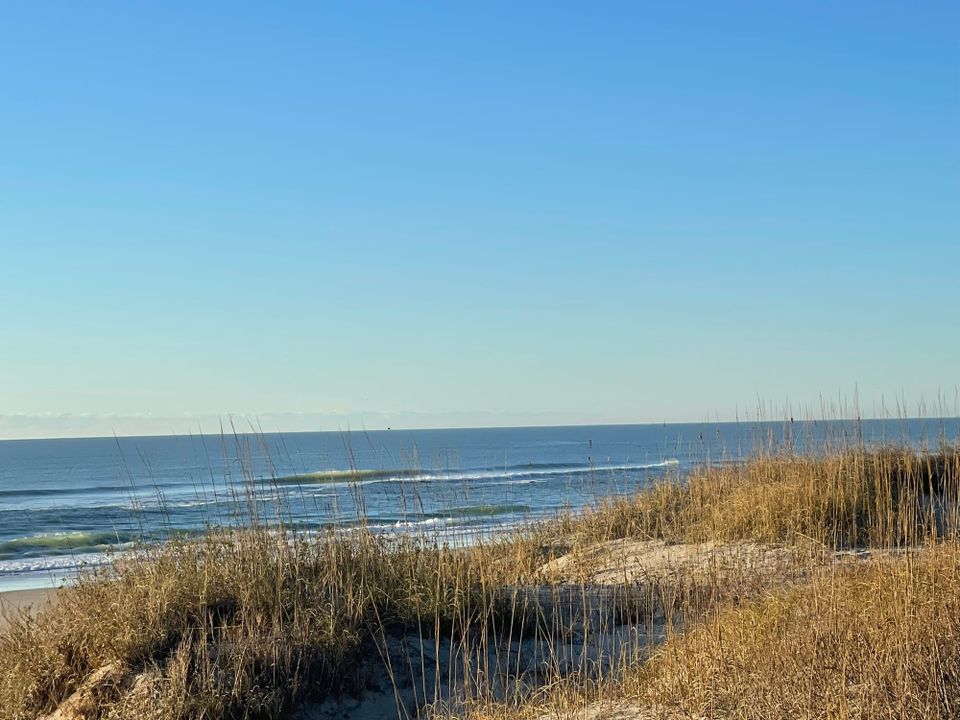
Instead of going through the city, Genevieve took the scenic route around the edge, though longer in actual distance, it probably ended up being a little bit faster. The road eventually turned and dead-ended into a small private beach with a boardwalk reaching over the dunes.
Genevieve amazed Gerhardt with her efficiency; by the time he traversed the boardwalk, she had already set up two chairs with a towel spread in between them on one dune, and the third on the neighboring sand dune with a towel folded in the seat. He made himself at home in the lone seat, only to have Genevieve’s shadow block his light almost immediately upon his sitting down. She tossed a magazine in his lap, then stood over him for some time, apparently to savor his reaction. As Monsieur Girardeau speculated the previous day, ‘Vive!’ featured that God-awful picture of him on the cover.
“Merci,” he said. She still hovered over him. “Hmmm… I wonder if they included any of my edits.” He opened the magazine and surveyed the table of contents, then began deliberately flipping through the pages one by one. He lingered on the first page of the article on him, then started reading it in earnest. Eventually Genevieve’s shadow receded, and he suppressed a laugh at himself for derailing her tactic. Perhaps surprisingly, every correction he noted, including his original paragraph, which they attributed to him, made it into the final copy. Once he finished that, he started reading the other articles while the Girardeaus went off for a long swim. He would occasionally glance up to see them in the distance, plying the waters just beyond the breakers. Body surfing had been one of his favorite pastimes when he visited the beach as a kid, but he wasn’t sure he wanted to try it now with nearly a kilogram of metal around his neck.
He slipped off his shoes and walked to the edge of the water, letting it run up over his toes, leaving his feet buried just a little deeper in the sand each time it rushed back into the sea. He looked in the direction of his homeland that was not visible from where he stood. The channel is only 14 kilometers at its narrowest point. Here it was about twenty-one. A visualization took form in his mind as ephemeral as a hallucination, but at the same time, as compelling as any tangible object. I could build a bridge across that. Gerhardt traipsed back and forth across the little swath of sand between the boardwalk steps and his chair as he lost himself in the contemplation of mentally building this construct.
A couple of adolescent boys with wave skimmers came tromping over the boardwalk. Gerhardt caught their appearance out of the corner of his eye, thinking the waves were almost too small now to get any use from skimmers. He returned to his chair, flipping open the magazine again.
“Hey, that’s Gerhardt Bosch...” The sunlight dimmed as two longer shadows stretched over him, encroaching slowly. “Damn! It is, isn’t it?”
“Holy jeepers! It really is him! Hey,” one of them called out in bewilderment of such an improbable encounter, “what are you doing here?”
“Reading.”
One elbowed the other and whispered something, inducing the latter to leave his skimmer and take off running. The remaining youth laid his skimmer on the sand and approached cautiously. “May we have your autograph?” Gerhardt’s immediate response was a raised eyebrow, but within minutes the other came bounding over the sand, huffing for breath with two copies of ‘Vive!’ thrusting one of them into Gerhardt’s hands, “Can you sign your picture?”
Gerhardt turned to the page with the photo of him smiling, “how about I sign this one, instead?”
“Sure!” they chimed. “Cool, this will be worth a lot of money!” Their bombardment of questions dizzied him, “I wanna be a flying ace just like you! How do I do that?”
“The best advice I can give you is to find another profession because there’s not much need for flying aces now that the war is over.”
“Yeah… but, there might be other wars!”
“Hopefully not anytime soon.”
The boy thought about it for a second. “Then… what are you going to do?”
“Go back home.”
“…Oh, so you’re not going to throw yourself off a precipice?”
Gerhardt laughed, “I wasn’t planning on it.” Despite his earlier convictions, he realized Teluricus’ act had been cowardly, and he did not want to be remembered as a coward. He motioned his head toward the water. “The tide’s getting low, and you’re losing daylight. You boys might miss your chance if you don’t catch some waves now.”
“We’re gonna take these home first.” They gathered up their boards and their treasure and went back the way they came about the same time the Girardeaus swam back in.
Genevieve queried, “what did those two kids want?”
“Autographs.”
“Of course, your adoring public,” Genevieve commented disgustedly, plopping her hat back on her head with the brim making a sun-glint orange-white halo around it. “Those kids have no idea. I’m sure it will be interesting for you to see how folks treat you back home.”
“It will, won’t it?” he let her comment roll off him as he folded the chair and gathered up the other items. That would be one storm he wasn’t sure how he was going to weather.
“You have no remorse, do you?”
“What do you want me to say? ‘I’m sorry,’ would sound a bit trite under the circumstance, don’t you think?”
“It would be a start.”
“I’m sorry for your loss, and I’m sorry for imposing on you,” he added earnestly, not sure how to handle the dilemma of Monsieur Girardeau’s hospitality and Genevieve’s resentment at the same time. “I know it’s an inconvenience.”
“An inconvenience?” She turned towards him. “That’s an understatement!”
“Let me get that,” he offered to take the other two chairs for her.
“I’ve got it, thank you very much…” She stalked off muttering, “Teutonic Barbarian,” so that anyone in the vicinity would hear her. Her footsteps resounded over the boardwalk followed by the muffled slamming of the trunk from the other side of the dune.
“You know,” Gerhardt turned his attention to Monsieur Girardeau. “I don’t want to be a burden. Maybe I should find somewhere else to stay tonight; I could camp out here.”
“No need, I’ll have a word with her.”
“I don’t want to upset her, and my presence is clearly upsetting her.”
“Don’t give it a second thought; she’s just pulling your chain. She’ll probably continue to do so until she gets a rise out of you.”
“Maybe I should stay in a hotel tonight. I could wire you the money when I get back home.”
“Hah,” Girardeau laughed. “I doubt you’d last five minutes in Laurien before someone decided to finish the job our flyboys didn’t.”
“You’re probably right,” Gerhardt shrugged.
“And just to make one thing perfectly clear: while each of us must do what we can to reconcile our nations, there are times when I, personally, find it very difficult to forgive you for your involvement in this war, and right now you’re not making that any easier for me.”
Gerhardt wondered what exactly he had said. “I’m sorry, what did I say to offend you?”
Girardeau laughed, “you really don’t see it, do you? Well, you’re hard to take sometimes, and you’re hardly the most humble human being I’ve ever met.”
It’s not my fault someone asked me for an autograph. “I tend to be more direct than most, but I don’t mean to come across as egotistical.”
“To say you’re egotistical would be an understatement.”
“That’s not something I cultivate. Look, I don’t want to put a strain on our relations, but we were on opposing sides, and our points of view are bound to be different. I can respect your opinion even if I don’t agree with it, and given our differences, I don’t understand why you would host me as your guest or prisoner, or whatever it is I should consider myself.”
“You apparently don’t know how many people out there would lynch you right now if they had the chance – and they would do a lot worse than drag you through the streets in chains. I just don’t want any more killing. We’ve had enough of that already.”
“That’s one thing we agree on, at least.” Gerhardt thought it best not to say any more on the topic but walked with his host back to the car and put the remaining chair in the trunk. He handed ‘Vive!’ to Monsieur Girardeau who brushed it away.
“You keep it.” They drove back in silence.
Going Home
Gerhardt rode in the front seat when Monsieur Girardeau took him to the dock two days later, again by a circuitous route that avoided the city. Girardeau had reissued him his uniform that morning, freshly cleaned and pressed, leaving him with nothing else but his medical records and the magazine in a large manila envelope. The navy still controlled the installation from which the ferry would depart so it was protected by a detachment of marines. The vehicle’s arrival garnered the immediate attention of the gate guards who signaled to other soldiers on the dock once they identified the passenger. Gerhardt started to feel the same way he had during his odious trip through the city on the way to the square. Girardeau stopped the car as close to the gangway as possible and nodded to his guest that it was time to leave. Gerhardt opened the door, but before he got out said, “I appreciate your hospitality. Sorry for the imposition.”
“Good luck.”
Girardeau drove away almost immediately once Gerhardt closed the door. At the gangway, two armed escorts that the gate guards had signaled joined him to usher him onto the ferry. He wasn’t sure if they were there for his protection or to make sure he stayed compliant with his agreement, but they left him as soon as he stepped foot on board. For the first time since his capture, he found himself back among the ‘Teutonic Hordes,’ hearing his own language spoken as the lingua terra for the first time in months. The noise of conversation faded an order of magnitude within a few seconds upon his entrance. He felt the weight of a thousand pairs of eyes, though never directly, or all at once. Contact was intermittent, but prolonged past the point of fleeting glances. These were his compatriots, and suddenly he felt as if he had let them all down. He didn’t know if these people saw what had happened to him in the square, but he figured more than likely they had all been shown a newsreel of it. A wave of glances accompanied him as he silently walked the length of the aisle until he found an empty seat. A guy next to the window with an eye patch gave him the once over, then went about searching for something in a duffle bag that had split halfway open and had so many holes in it that Gerhardt wondered how anything would have stayed inside were it not for a frayed rope that its owner had tied around it to keep it together. Infantrymen sometimes resented the airmen, complaining that they had it easy in comparison to their job. Judging by the threadbare jacket with half the buttons missing and breeches with gaping holes at the knees, Gerhardt surmised this sergeant had been through hell and back. The man stopped rifling around in his things when he found his target, then un-wedged a crushed cigarette pack from under the rope around the duffle bag. With some deliberation he pulled out a bent cigarette, then looked to his nearest neighbor and whipped out the last wilted cigarette of the pack, thrusting it in Gerhardt’s face.
I hate cigarette smoke. Gerhardt wouldn’t think to refuse, but instead appreciatively took the offering and put it into his mouth. The sergeant lit both their cigarettes with an unsteady hand blackened by grease. It smelled slightly of gasoline and Gerhardt feared for a moment that the man’s fingers might catch fire. He noticed that one of them was already truncated to the first knuckle. Though smoking was permitted only on the exterior deck, one of the sailors brought in an ashtray, and people passed it up to them from the back. Gerhardt pretended to inhale deeply before blowing out giant puffs of smoke. It tasted terrible, but he let the cigarette burn all the way to the nub, overpowering the urge to choke in order to share this moment of solidarity. The sergeant never introduced himself, only giving a nod of acknowledgement once they smushed the last of their cigarette butts into the bottom of the ashtray. Within a few minutes, the sergeant was soundly asleep with his head against the window. Perhaps Gerhardt projected the air of someone who wanted to be left alone because no one said a word to him for the entire two-and-a-half-hour trip.
A strip of land – Gerhardt’s homeland – materialized on the horizon. People already began to shuffle in their seats and gather their things in anticipation of disembarking, and a small line formed outside the facilities. The ferry pulled up to the pylons, but instead of throngs clambering towards the gangplank as soon as the sailors secured the lines, everyone stayed in his place and looked expectantly in Gerhardt’s direction. No one moved until the man behind him entreated him with an outstretched hand to go on ahead. Did they think he was a traitor or a hero? Hesitantly, he stood up and made his way down the aisle, realizing his limp wasn’t entirely gone and attempting to hurry only exacerbated it.
He stepped off the gangplank onto a red carpet that had been laid out for the returning soldiers and made the short walk into the terminal.
“Gerhardt!” He recognized his mother’s voice from across the building the moment he set foot inside. His father too, waited on the other side of a barricade rope. Gerhardt’s steps quickened into what almost passed for a run until he reunited with both his parents in a huge communal hug. For the first time since he was a child, he felt streams of tears roll down his face, faint hot streams that he could not repress at the joy of being home. He wiped them off on his sleeve, smiling exuberantly. Since his last deployment, and then his capture, it had been more than eighteen long months since he had seen his family.
“Wow, it’s so good to be home.”
His father asked, “how’s the leg?”
“Oh… it’s doing better, I’m fine. It’s healing.” He wondered how much they knew of his travails.
“We have the car waiting outside,” he motioned behind him with his head. “Let’s get out of here.”
“When did you take up smoking?” his mother asked as they went out to the car.
“On the ferry.” He checked to make sure he was out of earshot of anyone else then lowered his voice, “for the first and hopefully last time.”
“I see,” his mother responded as they all got into the car. “I hope that’s not too obtrusive.” At first Gerhardt thought she was talking about his cigarette breath, but then he realized she was referring to the chain when she reached over the back of the seat to touch it.
Though he didn’t want to bring it up, he ventured, “I assume you know what happened to me after I was shot down, then.”
“Everyone knows,” his father said. “They’ve shown the newsreel at every public event since.”
“That’s what I figured,” he sighed. How am I ever going to live this down? He fought to swallow that lump in his throat.
“We were so proud of the way you handled yourself!” his mother beamed.
Gerhardt’s mouth twitched. “Really?” He couldn’t imagine anyone finding anything redeeming about the incident.
“We were worried sick when they confirmed you had been shot down, but so thankful when we heard you’re still alive,” his father said. “It made my heart sink when we saw the newsreel, but you carried yourself well. That’s the spirit – never broken. A lesser man would have done as Teluricus did.”
“I’m not Teluricus,” Gerhardt commented.
“… and we’re awfully glad for that!” his mother said as she squeezed his hand. She had a powerful grip from years of working the land.
On the ride home, Gerhardt was taken by the recent devastation. He leaned forward over the front seat to ask, “listen, Monsieur Girardeau told me the allied forces had the power to level Aisengard in a firestorm, is that true?” His father nodded solemnly, so Gerhardt leaned back again and surveyed the countryside as it rolled by. In spite of the destruction, he noticed an unprecedented amount of optimism. Industrious children scoured the ruins, collecting up bits of scrap metal in buckets, adolescents and young couples busily gathered smaller pieces of debris into regular piles while motorcycles and mechanized vehicles towed larger pieces of rubble out of the road. The landscape became more desolate the closer to the capital they approached, and Gerhardt tried to imagine what lay in the future. As if struck by another sudden revelation, a vision of the skyline as it was to be emerged out of the scenery. I can rebuild this…
Member discussion