Chapter 2a
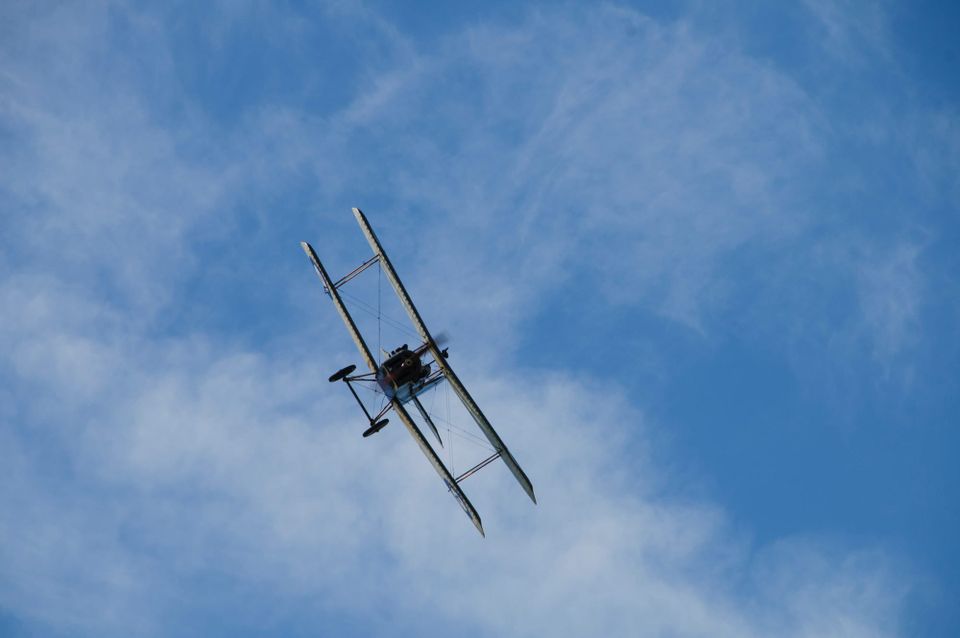
First Half
Reckoning
As the detachment of raptor aircraft from the 11th Valkyrie squadron edged its way across the sky in an arrowhead, the wing commander at the point of this formation thought about how serene the sky was now, knowing that soon, all hell would break loose. The water below seemed calm, oblivious to what was about to happen in the skies above, and immune to the acts of war. Almost six years earlier, when he was a green combat aviator, a mix of fear and exhilaration accompanied him in the pit of his stomach as he crossed the channel and into enemy airspace. Then, he couldn’t wait to get into it, as if firing that first shot would release the tension of anticipation-without-action that accumulated along the way. After his initial press of the trigger, his senses calmed to the point he was able to focus. This sense of urgency on the crossing remained his predominant state for two years into his career, but somewhere, those visceral instincts gave way to a more logical and premeditated outlook.
Accruing responsibilities made the pilot more aware, not just his own struggle to survive, but the greater sense of conflict on both sides. This was war and he had only one objective – to win. It wasn’t about personal glory or revenge, it was about getting in and out, inflicting as much damage to military targets as possible, then getting himself and his fighters home safely…
The engine skipping interrupted his contemplation; it sputtered once before resuming in a slightly rougher timbre. Some clouds had rolled in on the southeastern horizon, and it appeared the group was flying into a low-pressure trough. The pilot leaned the mixture and adjusted the throttle until the engine returned to its more-or-less usual drone. The war had gone on far longer than anticipated and resources dwindled in ways that made themselves felt. His engine had about one more mission before it would need a complete overhaul. Earlier in the war, he would have commandeered another aircraft until he could do the maintenance, but at this stage, such luxuries did not exist. He wondered momentarily if he should abort the mission, but everyone else in the squadron seemed to be doing fine, and theoretically, the engine had at least one more mission in it. By this time, he knew some tricks, the rest was all luck and a prayer.
There they were – black outlines of aircraft in the distance. Bi-wing Aardvarks closing fast. He already selected his targets, climbing suddenly to get as much altitude as possible, positioning himself between the sun and the enemy when he could before they could spot him, then dive down in a sweeping angle onto their formation to rake as many fighters as he could. By now, they knew his tactics, and they knew who he was and started to break formation as soon as they saw him begin his climb. At least he had gained a few hundred meters of altitude, and glancing over the side of his cockpit, he identified two aircraft that he would bring into his sights. At the same time, he assessed where the other aircraft were and who would be in the best position to attack him. His mind already calculated several scenarios as he dove down onto his first target. The steep bank transformed into a dive that would have lifted him out of his seat were it not for the harness that bonded him to the aircraft. Momentary weightlessness transformed into a crumpling downward pressure when he pulled out of the dive. The shock of how quickly the aircraft went down, after only one or two bursts disturbed him, a slight climbing turn and nose over brought the second aircraft into his sights, and soon… it zoomed right by, then continued flying its previous course. He had hit the pilot, but the aircraft was intact. It would probably fly until it ran out of fuel, or the pilot came to and managed to crash or land.
As he knew there would be, an Aardvark closed in on his left wingtip, and another bore down on him slightly from a right quartering flank. He cut the power and kicked the rudder over to snap the nose into a quarter spiral, initiating the spin long enough to take him out of the line of fire before recovering. His maneuver had the desired effect and the enemy to his right cut directly into the line of sight of the aircraft that had opened fire on him. With him out of the way, the enemy Aardvark shot down its own wingman.
That’s too bad. Perhaps the raptor squadron commander could take out the guy who fired on him, just so the enemy pilot wouldn’t have to live with the guilt of killing one of his own for the rest of his life – a life that would be short-lived as the squadron commander climbed his raptor into a loop, rolling out at the top both to gain altitude and assess the battle space below and reacquire his target. He rolled inverted to execute the second half of the loop that would line him up on a perfect top-down strafing trajectory toward the Aardvark during his descent. The most complicated aspect of this maneuver was to avert the other aircraft in time to avoid a collision, barely missing by half a meter. Having dispatched his last target, he scanned the sky to check on his wingmen. They had selected their targets and were in the process of engaging them.
The commander noticed an enemy in pursuit of one of his raptors, so he redirected course to intercept. Since this epoch, well before the age of radio was worked out in aircraft, no one could call for help. Squadron members had to look out for one another and watch each other’s tails. A hand signal and a turn towards home was the only indication the commander could give that it was time to go back. The enemy S-turned close on his wingman’s tail, waiting for the moment when the sight lined up. The raptor leader merged towards the pursuer, zooming over the top of his own wingman’s aircraft in uncomfortable proximity. This tactic relied on the fact that the enemy directed fire at his compatriot at close range and had so focused on the intended target that he became oblivious to everything else. The commander put just enough pressure on the trigger to release a short burst from his guns during the pass. The maneuver worked, and yet another Aardvark plunged into the channel. The rate of attrition favored the raptors, and one by one, the Aardvarks either retreated or succumbed.
By now, A black stream of oil trickled back from the raptor’s engine cowling and the lead pilot understood that by pressing the aircraft through such extreme maneuvers, he was pushing the engine beyond its breaking point. His aircraft had also sustained a few glancing shots after that last pass. At this point it was time to go home, and the commander held thin hope that his aircraft could make it back. He might be able to ditch, but his strategy would be to climb as high as possible without passing out in the rarified air, fly as long as his engine would carry him, then glide as far as he could. If he were lucky, he might be able to land on the beach at home. Otherwise, he was in for a long, cold swim with the odds of survival exponentially stacked against him the further from shore he ditched.
Just as the pilot was about to turn his fighter wing home, he noticed several silhouettes in the distance… another Aardvark air wing. Though he knew his engine would never last through another confrontation, the Aardvarks were too close not to engage. Aardvarks were faster, but less maneuverable. If the raptors turned home, the Aardvarks could overtake them. His luck and a prayer were all he had – that and a responsibility for his squadron. He would stay in the fight as long as he could, but reality of the odds settled cold and heavy in his gut.
As the raptors turned towards to engage them, the squadron commander checked behind him to witness the most disturbing sight he had ever seen – at first, nothing but pinpoints in the distance – but clearly, yet another Aardvark air wing. Once the dogfight began, the second air wing would join the fray. Where were the enemy suddenly getting all of these aircraft and these pilots? They were certainly feeling the losses too, weren’t they? To his left – water. To his right – land, enemy land. He debated whether to signal to turn home or engage impossible odds. Either way, some folks weren’t coming home tonight. The pilot took a deep breath… it was becoming clearer in his mind that this would be his last stand. He selected his targets…
Within minutes, the second Aardvark air wing engaged. Perhaps as before, he could confuse them so that they got caught in their own crossfire… but his engine was fading fast, sputtering and spitting plumes of oil over the cockpit windshield. Suddenly an immense pain pierced his left leg which immediately cramped into unresponsiveness. He pushed the pain aside to focus on the task at hand, selecting a target and thinking how to draw fire away from the rest of his squadron. Maybe he could break towards land and… An Aardvark turned to engage him, but right behind the enemy aircraft was one of his own. The raptor would take him… The pilot watched for a second, expecting the raptor to open fire. His wingman had the shot, he had a clean kill, but then… the raptor simply peeled away…
Dietrich, what the hell are you doing? For the first time, the pilot lost his train of thought in wonder and dismay of what he had just witnessed. Had Dietrich’s weapon jammed? The next shot took his breath away. Meanwhile his wingman had opened fire on another aircraft. His mind tried to calculate what just happened, but he knew that none of that mattered at the moment; if he were going to make his break, now was the time. He gently nudged his engine to full power, then turned towards land to draw the enemy with him. Dietrich was leading the squadron home, so the commander decided he would do his best to allow the others to get away unhindered. It was all he could do to cling to consciousness during the hasty descent. Once over land he hugged the terrain to avoid letting ground positions take a shot at him. At the height he passed, they would have little time to react. Perhaps the exhilaration of flying only meters above the ground at top speed was the only thing that kept him hanging on in those last moments. At this juncture his most likely demise would come from another bullet from one of the chasing aircraft, or from the impact of crashing at speed into the ground.
He would press inland as far as he could, until the engine died or another enemy bullet found him. Ahead, the maritime forest gave way to flat farmland, and he might be able to find a suitable spot to put the aircraft down. In those seconds, the pilot considered Dietrich’s abandonment of him. Given the wing commander’s already reduced probability of survival, and the fact that saving him at that moment might not have saved him in the long run, perhaps Dietrich’s had been the correct decision. Dietrich was second in command, and it was his responsibility to take over in the event of the commander’s incapacitation. In a zero-sum game, leaving him to be shot down might give Dietrich the only chance to save the others.
The pilot wasn’t sure if he had momentarily lost consciousness, but he was jolted by the swishing sound of leaves… turned out to be the tops of cornstalks brushing the bottom of his airframe, along with the occasional thud of ears of corn hitting the landing gear… His focus narrowed to putting the aircraft on the ground, so he reduced power gradually enough to bleed off his momentum and concentrated on keeping the nose of the aircraft above the cornstalks so that it didn’t dive into the dirt. He rode the crest of the vegetation, until his aircraft lost its momentum enough that it finally sank into a sea of green, and all he could do was keep the stick pulled back to prevent being flipped over. The landing gear made intermittent contact with the furrowed ground, and after what seemed an eternally long, bumpy ride, the aircraft plowed to a halt in the middle of some vast field. He cut the engine and glanced above him at several Aardvarks that flew overhead; that’s when the searing pain in his leg and his lung gripped him. He started coughing, and he wasn’t sure, but he felt as if he were sputtering up blood the same way his engine had been spewing oil.
There was relative quiet in the wake of the Aardvarks’ passing. A few more flew over, but at higher altitude. The chase was over, and the others had probably disengaged to try and pursue what was left of his retreating air wing. The smell of hot metal and burning oil seemed immediate, but distant in his mind. He chose instead to feel the wind blowing gently from the East, and to watch how the corn stalks wavered slightly back and forth under its impetus. The whispering breeze carried with it the sound of cricket chirps. The corn had just started tasseling, and he could see the cornstalks’ yellow fuzz ruffling in the wind. How ironic he thought that he was here, in the center of this idyllic scene, in the midst of a brutal war. Not a bad place to die.
His senses homed in on the sound of someone making his way through the foliage towards him. The cold, hard weight of his sidearm made itself felt on his right leg, so slowly, the pilot reached for it, disengaged the safety, and drew back the hammer. At this point, he questioned what purpose there was in taking another life, especially when his was already over. There was nothing to be gained from it now. He jerked back involuntarily and instinctively raised his weapon at the appearance of a face. A redhead with two braids in symmetric loops on either side of her head and green eyes appeared over his cockpit like some magical leprechaun. She couldn’t have been more than twelve years old. He exhaled a deep breath, lowering his pistol, reengaging the safety and setting the weapon on his lap. Thank God he had the presence of mind not to shoot.
The face disappeared as quickly as it appeared and frantic shouts receded through the field, “Il est ici! Il est ici!” They would come for him he knew, either to kill him or take him captive if he survived long enough. That was the last thing he remembered before drifting into a thick gray haze.
Awakening
“Gerhardt Bosch,” a voice called to him, speaking with a much softer accent than he was used to hearing, “do you know where you are?”
A flashback of memories, first plowing into the cornfield, the breeze, the crickets, the little leprechaun girl… all flooded into his mind. Then there were transient episodes of pain – intense pain – that quickly receded back into a gray haze.
“No, I can’t say that I do,” the pilot responded in a language different from his own, one that, in his mind, matched the speaker’s pronunciation.
“Oh, so you do speak our language.”
“Doesn’t everyone? It was the Lingua Terra for 400 years.”
“Indeed. I’m glad you Barbarians appreciate that fact, and apparently, you do know what country you’re in.”
“Yes…” Gerhardt struggled to sit up, wheezing for air, then grunting at the sensation that jabbed him in the bottom of the ribcage when he moved. Immediately, his leg felt as though a sharp spike had pierced through it.
“Careful there, you went through a pretty grueling surgery yesterday, and you’ll be feeling it for a while.
The pilot looked down at the side of his leg, then touched it lightly to assess a lumpy shape he could feel bulging from the inside of his skin. Once he regained his breath, he asked, “what’s this?”
“Our surgeons are investigating a new technique to induce bone regrowth. You have a comminuted fracture of the femoral shaft – often people don’t survive that – so we’ve put it back together with steel plates and screws. You’ll likely receive mild electric stimulation over the area every day.”
The patient could feel his face contort slightly when he considered the concept. “I don’t have any remembrance of what happened after that landing.”
“The doctors rushed you into the operating theatre while you were still unconscious. We’re running low on nitrous oxide, so they used chloroform instead. If they had waited ’til you came to, the shock alone might have been enough to kill you.”
“Much obliged.”
“Just to inform you, we’re also running low on painkillers. Anything we have left goes to our boys preferentially.”
The pilot blinked a few times to bring his counterpart into focus. He grabbed his leg again as a dagger-sharp pain radiated through it, then winced when his hasty movement arrested his breath.
“You also have several broken ribs and a punctured lung. Just so you know, you didn’t just crash in that field. You were shot down.”
“Obviously.” Gerhardt recalled the circumstances of that event all too well.
“I’ll bet you thought that could never happen.”
More than a dozen harrowing encounters and several miraculously improbable seat-of-the-pants survivals replayed themselves in Gerhardt’s mind. “I’m surprised it took this long,” he mused distantly.
“Well, your guardian angel must have been watching over you because the bullet through your lung didn’t tumble. It went through-and-through with a clean exit, missing every major blood vessel on the way. Through the leg, you weren’t so fortunate. The bullet fractured your femur in three places and left several large shards of it lodged in some soft tissue. Again, fortunately for you, our surgeons managed to pick most of it out, but it will be a while before you’ll be able to walk on that leg again.”
“So… I assume I’m in a hospital,” Gerhardt reasoned. He realized that if the bullet through his torso didn’t tumble, he had to have been hit at very close range. Otherwise, he probably would have died from internal bleeding and organ failure.
“Best of the best, Ste. Michelle du Lac in Laurien. As I say, someone was looking out for you because the doctors anticipate a potentially good prognosis if you don’t die from infection or sepsis.”
The ‘room’ Gerhardt found himself in appeared to be a section in a larger ward partitioned off by a heavy black u-shaped drape that deadened the sound but left the wall behind him with the window exposed. Judging from the light, it must have been early evening. “How long do you anticipate I’ll be in the hospital? If I survive, I suppose you’ll be taking me to a prison camp after that.”
“Given your condition, you probably won’t be going anywhere for several months at least, and by then, the war may be over.”
“Optimistic.”
“I think you’ve seen the way the tide has been turning. Three air squadrons took you by surprise, no doubt.”
“I was wondering about that,” Gerhardt acknowledged.
“Our boys knew you were coming, and they made sure they were ready for you,” the interrogator smiled malevolently.
So, they were targeting me specifically. At least if he were going to be shot down, the fact that the enemy singled him out made his failure somewhat more excusable.
“They’ve been gunning for you for a long, long time now. Your conceit, and the fact you painted your aircraft in such ridiculous colors made their task much easier.”
Gerhardt wanted to explain that the risks he took were out of necessity, not arrogance, but he hardly had the energy to debate. His signature orange-on-white zig-zag pattern evolved over the years from repairing a rip in the fabric of his aircraft. His air wing had none of the standard dark green, almost black paint on hand, so Gerhardt covered the patch with some white landing marker paint they’d put on the grass to delineate the runway. He thought the result was absolutely hideous, so he designed an elaborate, angular maze, and painted the straight edges so meticulously that from a distance the zig-zag lines appeared to scintillate against the green-black background. Eventually he acquired some orange paint and traced over the original design, leaving a thin white border on either side. The intended effect was to daze and confuse anyone aiming at him. Gerhardt realized the futility of trying to rationalize all of this and wanted just to go back to sleep. At some point, his interrogator sensed his waning attention and said, “I’ll leave you now to rest. You’ll need it to recover.”
Gerhardt raised the obvious paradox, “after your guys tried so hard to kill me, why would you want me to survive now? They had that chance in the field, so why didn’t they take it?”
The interrogator’s smile bordered on sinister, but he left the question unanswered.
Recovery
Days dragged into weeks causing Gerhardt to lose track of time. Convalescing and regaining his ability to walk again took some effort. Electric stimulation was painful at first, but gradually became more tolerable. As another experiment, his caregivers fitted his bed with an elaborate frame that had all sorts of springs and bars to push and pull on. A therapist came almost every day to guide him through a series of exercises. Though strenuous given his condition, he found that he rather enjoyed them, and the program gave him added impetus to improve his health steadily every day. Once he regained the strength to sit up, fatigue gave way to restlessness, and he would not content himself sitting idly in a hospital as the seasons blended into a haze of time. Though he never spoke much to anyone other than the medical staff, he wandered the grounds for hours, first wheeling himself around in a convalescence chair, then, with the aid of a walker, and gradually a cane. As he progressed, he spent more time out of the ward, trying to make himself decreasingly dependent on any sort of assistance until he carried the cane with him only as a backup.
Reading became his other occupation. Sometimes someone would bring him an outdated newspaper, worn and tattered from sitting around for a week in one of the lobbies. From the spotty information he received, Gerhardt garnered that within weeks after his being shot down, his host’s Allied Forces managed to drive out or capture many of his country’s occupying forces. Early in the war, Teutonic air wings managed to set up several forward bases on the front lines across the channel to support infantry. He, like most pilots, would rotate into the forward bases for several months at a time before going back to their main squadron across the channel. With the expulsion of the expeditionary Valkyrie Air Squadrons and the sinking of several Teutonic capital ships, Teutonic ground forces found themselves stranded with little by way of reinforcements or supplies. The 11th Valkyrie Squadron, now under Dietrich’s leadership, had attempted to mount several sneak attacks from across the channel. According to Francinian sources, these sporadic raids amounted to little more than a last-grab effort to disrupt Francinian strongholds in what was once Teutonic-held territory. Displaying a certain reckless cunning, Gerhardt’s successor acquired increasing fame, as well as the nickname White Fox, probably as much for his tow-headed appearance as for his wily tactics. Every time Gerhardt read the news and the exploits of his compatriots, he couldn’t help but feel ashamed for the fact that here he was, languishing in the heart of the enemy capital, unable to do anything other than wait out the end of the war. An uneasy impatience accompanied his shame. I wonder what will happen when this is all over...
On the way back to his ward after one of his morning outings, he happened to pass by a mirror. He stopped to gaze at the image it projected back at him of this bestraggled, rough-hewn vagabond with his blond hair drooping over his eyebrows and thick scraggly beard growing over his face. “Wow,” he muttered at his reflection and shook his head. Do I look that bad? How could I have let myself fall into such a state?
Several days later his caregivers took him to the barber, who returned his hair to military specification, gave him a shave, and neatly trimmed his mustache the way it had been before his capture, where it stopped right at the edge of his mouth. Afterwards, the staff took him back to a private room with a patient bed and a cheval mirror in one corner.
“We have some clothes for you. We had to send for these by special request…” Someone had laid out his summer weight uniform on the bed and his best pair of boots at the foot. “Get dressed.”
Once he completed the task, he gazed at his reflection. The man who stared back at him did not project the demeanor of a defeated prisoner. “Come in,” he responded at the brisk rap at the door. A nurse popped in momentarily, “you have a visitor,” then receded from the entrance.
A man whom Gerhardt recognized as the country’s Minister of War entered with a thuggish looking army sergeant and entreated him to take a seat on the bed. “Good afternoon, Major Bosch.”
“Monsieur Girardeau,” Gerhardt acknowledged.
“I have news for you. The war is over.” The Minister of War held his gaze for a moment before adding. “Your side lost.” Gerhardt took a moment to absorb what Monsieur Girardeau had said, deciding to take it at face value. He wondered if they might execute him now, but then why would they have gone through so much trouble to save him, except perhaps to use him as a guinea pig for their experimental procedures?
“So, what do you want from me?”
“Ah, that is what I’m here to discuss. First and foremost, we want to ensure that you will never, ever again wage war against this great nation or its allies.”
“I’m just a major, that’s not a decision I have the authority to make.”
“I mean you – specifically.” Gerhardt waited for an elucidation. “You will have to sign a covenant that you, personally, will in no way participate in any form of aggression against the allied forces as long as you live.” Such a decree puzzled Gerhardt, who furrowed his eyebrows at the notion of it – as if his participation in the war really made that much difference. The Minister of War continued, “there will be a victory procession, and you will be taken to the center of the city…” he raised a finger and looked behind him towards the door, then called someone outside. “We have something… special for you.” A doctor in a white coat appeared, along with a young corporal who brought in a pile of black chains on a cart and left it in the middle of the floor. It was difficult to tell if there were more than one, or a single giant chain. Gerhardt raised an eyebrow at it.
“This chain has four hundred and ten links – the same number of people you shot down – including the seven airmen you killed in your last engagement…”
“No way in hell…” Gerhardt interrupted, quickly deducing where this was leading.
“We can do this the hard way.”
“I’m not going to let you put that on me if that’s your intent.”
The Minister of War nodded to the doctor. Before Gerhardt could get off the edge of the bed, the sergeant grabbed him and pushed him back, then he felt a needle go into his arm. His eyes rolled into his head and the room started to spin. Try as he might, he could not hold onto consciousness, and everything faded into some vague disconnected imagery. At one point, he became aware of everything but was unable to move or respond. He could feel the heavy weight being laid upon him and hear disjointed conversation. It took what seemed a long time to regain full awareness and control of himself. He had no idea how many minutes the procedure took, but he eventually found himself seated on the edge of the bed, wobbling to one side, heaving for breath under what felt like crushing weight, and drooling slightly. The sergeant held him up, and the Minister of War, who was the only other person in the room, quickly wiped the saliva from the side of his mouth with a handkerchief. Gerhardt looked down at himself to see that they had him handily bound in what appeared to be one long, heavy iron chain. They had wrapped it crisscross over his chest, around his waist, along his arms with one long span of it traversing shackles they had fixed to his wrists. That section almost reached his feet, so he immediately started winding it up on his forearms to keep it from pulling him forward. Assessing it for a few moments, he noticed that they had fixed it in several places with formidable block locks, so he couldn’t just wind his way out of it.
“There are fourteen of those, each representing one of our ships you sank,” Girardeau informed him.
His predicament utterly disgusted him. “I’m not going to let you drag me through Laurien like this, so you may as well execute me now.”
The Minister of War cast a skeptical gaze at him. “You’re hardly in any position to protest.”
Gerhardt’s eyes narrowed and he could feel himself glaring daggers at the man. “I’ll kill myself before I let that happen.”
“You won’t get that opportunity. Besides, we won’t drag you; we’re not that uncivilized. We’ll drive you in a car… but…” He took one last length of black chain – different from the crude chain they bound him with in that the links lined up so that it lay flat across his hand when he presented it to him. It appeared dense, tightly linked, and even weightier than iron. Unlike iron, it had a black matte sheen to it. “Just so there are no surprises…” Monsieur Girardeau approached the downed pilot and attempted to put it around his neck. Gerhardt immediately reared his head back. “You’d better let me do this; you won’t want it too tight since you’ll be wearing it for the rest of your life…”
“You have no right…”
“Might I remind you that your side initiated this war, and you played a decisive role in that aggression…”
“No, I just conveniently fell out of the sky at the opportune moment, so you could use me to take your vengeance on an entire nation…”
“I’m afraid not.” Girardeau leveled a flat glare at him, then pronounced bluntly, “this is our vengeance against you.” Gerhardt immediately raised an eyebrow.
“What you did, you did in a very cold, meditated way.” The War Minister’s voice sounded deadly calm.
“No different from any other fighter on either side of this conflict!”
“Oh, no.” Girardeau shook his head; his voice dropped an octave. “You killed more than 8,000 people in cold blood, more than any other fighter ace, or any individual during this war. We can, and we do hold you personally accountable. As the winners in this conflict, it is our prerogative to choose what form your punishment will take.” Gerhardt tried to respond but couldn’t think exactly what to say. Girardeau leaned over with his hands on his knees, hovering a few centimeters from Gerhardt’s face. His breath smelled of pipe smoke. “You were relentless… and you were merciless. People were dancing in the streets the day you were shot down so don’t expect any compassion now.”
Gerhardt’s mouth twitched. The chain around him shifted in a cascade of noise when he drew in and released a deep breath, resigning himself to the fact he wasn’t going to get out of this.
Monsieur Girardeau stood up again and leaned back a little as if assessing his adversary before adding, “people here want a resolution, as well as the assurance that such a time in our history is never repeated. Having you sign a covenant of nonaggression will go a long way to giving them that.”
“How are you going get that on me without killing me? If you’re planning to follow the historical precedent… you slip up with a hot iron or crack my skull with a hammer and…” At that point, Gerhardt almost wished they would make a fatal mistake.
“We’re careful. We do have the historical precedent as well as the iconographic evidence as to how it was done… but to allay your fears, we’ve perfected the technique on several dogs to be sure it can be safely done. None have perished yet.”
“That’s… so reassuring… but I’d rather die than let you do that to me.”
“You’ve said that already,” Girardeau nodded, “but how exactly do you plan to stop us? …let me be a little more specific.” The War Minister tilted his head towards his opponent. “If you care at all about anything other than yourself, consider this: if you choose not to cooperate, we can level Aisengard in a firestorm beyond your wildest imagination, and then scorch the countryside so badly that nothing will grow for another thousand years. The Allied Powers are in a position to enslave your entire nation for the next millennium or wipe it entirely off the face of the planet. Do I make myself perfectly clear?”
“Perfectly,” Gerhardt seethed, shaking with anger at the futility of his situation.
“Now, sit still.” Gerhardt fought to suppress a shiver as the man placed the chain around his neck, temporarily fixing it in place with an open link. Girardeau made sure he could get a few fingers from each hand between it and Gerhardt’s already clenched muscles. The chain felt too heavy to Gerhardt to be worn for any length of time, but at least Girardeau removed it for the time being. “Just as in the historical precedent, we’ll do this right after you sign the agreement.”
“When will that take place?”
“Glad you asked. Here is a copy of the document you will sign. Read it, very carefully, and whatever clarifications you may need, ask them now. We’ll pick you up in about an hour.”
Member discussion